Cortical Columns & the Canonical Circuit
What if your brain uses the same algorithm for seeing, hearing, and thinking? It does. The neocortex runs one repeating circuit — the same blueprint, copied millions of times across every region.
The neocortex has 6 layers, but the logic is simple — input → process → output:
• Layer 4 receives incoming signals (from the thalamus or other regions) — the mailroom
• Layers 2/3 process and share with neighbouring cortical areas — the team meeting
• Layers 5/6 send output downstream to other brain regions — the decision that ships
This exact flow repeats in your visual cortex, your language areas, your frontal lobe — everywhere. Neuroscientists call it the canonical cortical circuit. The implication is profound: the brain might be running one universal computation, not thousands of different ones. Crack the code of one column and you've potentially cracked the whole cortex.
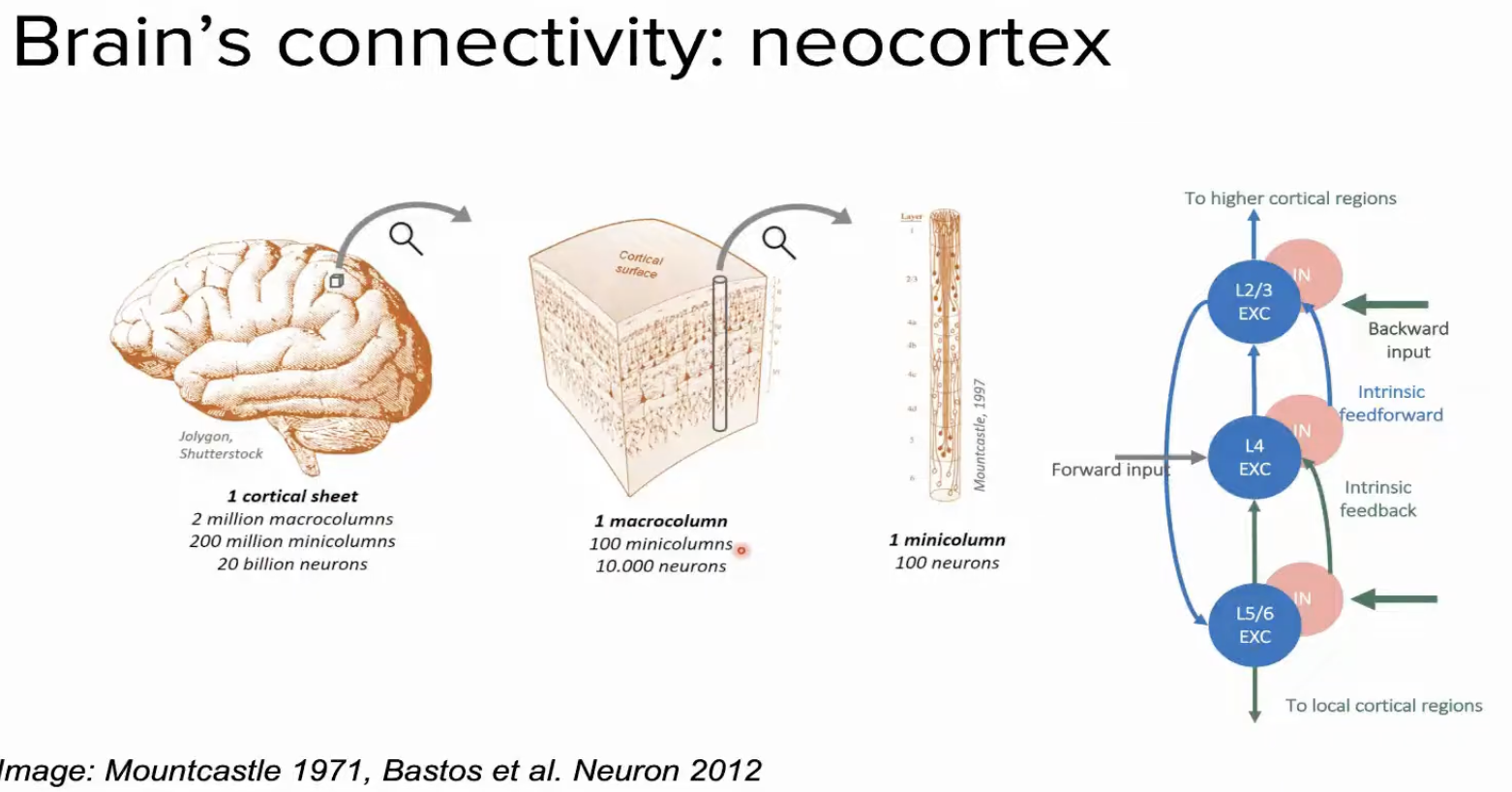
The same L4 → L2/3 → L5/6 circuit repeats across the entire neocortex
Now here's where it gets interesting. You'd expect neurons to just connect with whoever is closest — but that's not what happens. Within a layer, nearby neurons do connect more, but zoom out and you see something stranger: neurons skip their immediate neighbours to wire with specific patches far away.
Those patches aren't random. The rule appears to be: similar neurons wire with similar neurons, regardless of distance. In visual cortex, neurons that detect the same edge orientation find each other across millimetres. It's like being at a conference and ignoring the people next to you to find someone across the room working on the exact same problem.
This self-sorting is how specialised brain regions emerge — not from a master blueprint, but from neurons finding their functional colleagues and strengthening those connections through use.
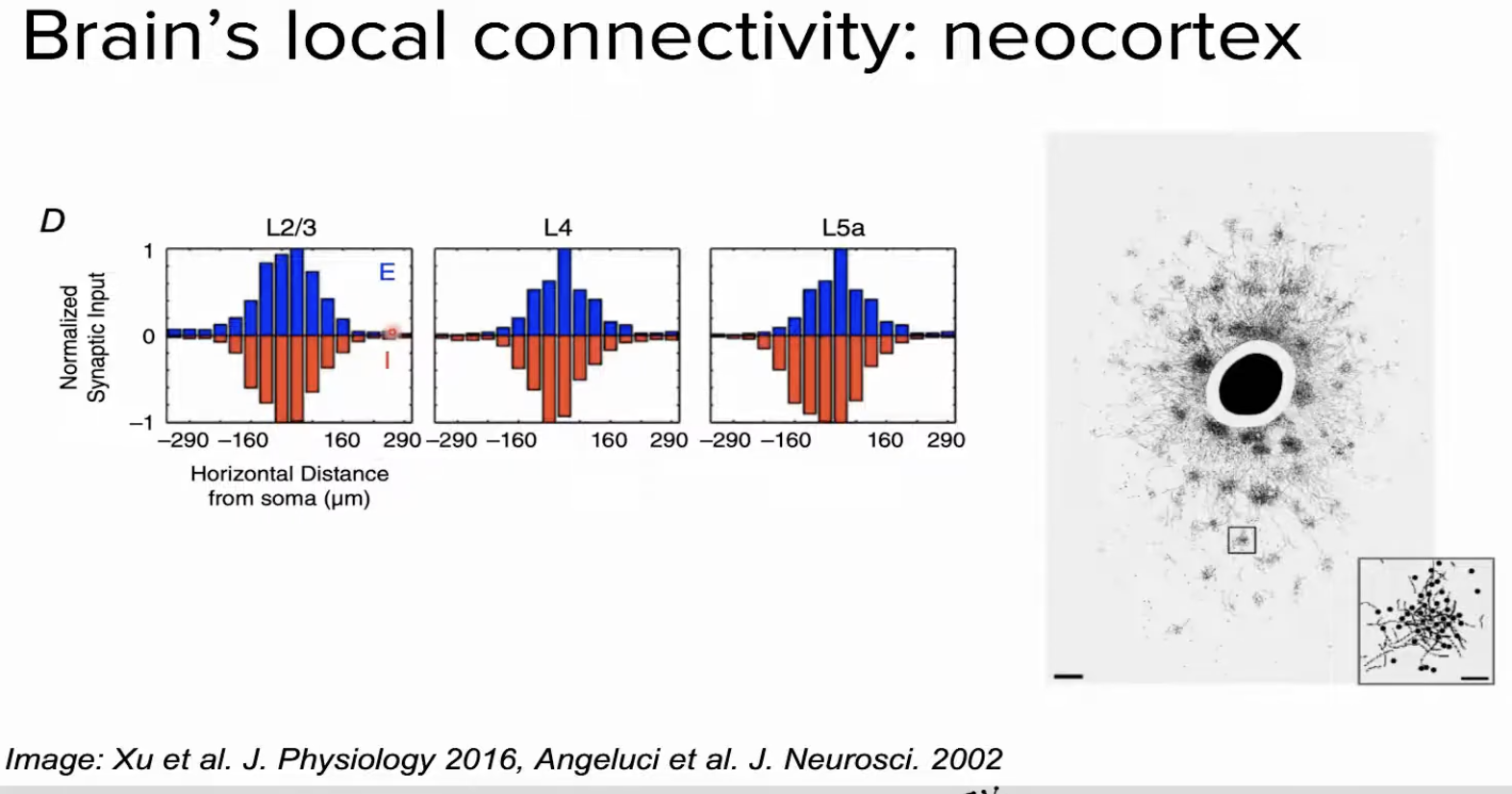
Nearby neurons connect more — but neurons also skip distance to find functional partners, forming distinct patches